
Domestic-focused agricultural chemical (agrochem) companies could face near-term headwinds, given the worries on the El Nio effect on monsoons, higher inventory, and pressure on margins. Some of these were reflected in the October-December quarter (third quarter, or Q3) results of companies and may impact them in the current quarter (fourth quarter, or Q4) as well. Nuvama Research pointed out that the sector witnessed mixed performance during the quarter as global agrochem and domestic fertiliser companies maintained growth momentum, while adverse agronomical conditions and excess channel inventory weighed on domestic market volume offtake.

Global trends, WPI inflation data for April and the ongoing quarterly earnings of corporates would be the major driving factors for the stock markets, analysts said. Investors would also keep a tab on the movement of foreign institutional investors who are on a selling spree in the domestic equity market for the past many days. "Inflation concern and monetary tightening across the globe are key concerns for the equity markets. "Equity markets are under the strong grip of bears however they look extremely oversold and due for a pullback rally.
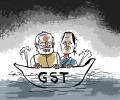
The Centre managed to collect only Rs 990 crore as compensation cess in April 2020-21, almost one-ninth of the figure of Rs 8,874 crore mopped up a year ago. The subdued collection would further increase states' problems unless the GST Council, which meets next week, decides to borrow from the market.

Sixty such offers have been made on Day 1 of the placement drive.

TCS chief operating officer N Ganapathy Subramaniam earned over Rs 11.61 crore in FY19 as compared to Rs 9.29 crore last fiscal.

HR Guru Mayank Rautela offers practical advice.
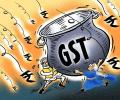
India's GST collection remained above Rs 1 lakh crore for the third month in a row at over Rs 1.17 lakh crore in September, raising expectations that second half of the year will post higher revenues. The tax collections in September on goods sold and services rendered was 23 per cent higher than Rs 95,480 crore collected in September 2020, and 27 per cent higher than Rs 91,916 crore collected in September 2019. The collection in September is the highest in five months since April, when revenue was at record high of Rs 1.41 lakh crore.

Mop up grows 10% y-o-y at Rs 1.05 trillion, almost equal to levels in February before a nationwide lockdown to contain the coronavirus pandemic

Key drivers of profitability for Zomato has not witnessed remarkable growth, the management believes the venture will turn profitable in the long term.
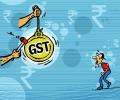
The broad trends of GST collections will make you wonder if indeed the biggest indirect tax reform in the country has led to a real improvement in revenues, notes A K Bhattacharya.

If the protected growth in GST revenue is reduced to 10 per cent, the Centre would save more than Rs 25,000 crore in 2020-21 if none of the states show any revenue growth. This would nearly amount to 0.1 per cent of the gross fiscal deficit and help the government in avoiding fiscal slippage to some extent in subsequent years.

As more organisations across sectors awaken to the far-reaching benefits of having skilled data professionals on board, the demand is projected to grow by 28% by 2026, notes Subramanyam Reddy, founder and CEO, KnowledgeHut, a global edtech firm.

The government will set up 16 new medical colleges over the next five years.

Big-ticket investments taking off is crucial for Kerala given the years it lost to labour militancy courtesy the same political forces currently in power, explains Shyam G Menon.

'IIM Ahmedabad has seen one of the best placement seasons ever and this change can be attributed to the markets opening up after the pandemic.'

Corporate India handed over an average increment of 8 per cent in 2021, and early estimates reveal that average increment for 2022 is expected to increase to 8.6 per cent in line with a healing economy and improving confidence, according to a Deloitte survey. As per the second phase of Deloitte's Workforce and Increment Trends survey 2021, 92 per cent companies gave an increment in 2021 at an average of 8 per cent, compared with only 4.4 per cent in 2020, where just 60 per cent companies had extended a pay hike. For 2022, average increment is expected to increase to 8.6 per cent, at par with the pre-pandemic levels of 2019, the survey said, adding that about 25 per cent companies surveyed have projected a double-digit increment for 2022.

A bench of Justices DY Chandrachud and Hima Kohli said an attack on individuals does not mean it is an attack on the community but it needs to verify the claims of any such incident if it is made in the public interest litigation.

The volume of shares traded in the stock market had fallen 28 per cent in April. Turnover, or the value of securities changing hands, fell 12.6 per cent. This trend of falling volumes seems to have stabilised in May.

The most popular benefit across all demographics is company health care programs to compensate for the increased costs of medical care.

Companies in India are expected to dole out an average increment of 7.3 per cent to employees this year amid faster-than-expected economic recovery and revival in business and consumer confidence, according to a survey. The first phase of the 2021 Workforce and Increment Trends Survey by Deloitte Touche Tohmatsu India LLP (DTTILLP) also said the average increment this year will be higher than 4.4 per cent seen in 2020 but lower than 8.6 per cent given by companies in 2019. As many as 92 per cent companies that participated in the survey plan to give an increment in 2021 compared to only 60 per cent last year.
'Today's generation can learn from him how not to hurt anyone's sentiments at a time when many stand-up comedians deliberately set out to do so.'

In 2019-20, Gopinathan had received a total remuneration of Rs 13.3 crore. According to TCS' annual report for 2020-21, Gopinathan received Rs 1.27 crore in salary, Rs 2.09 crore in benefits, perquisites and allowances, and Rs 17 crore in commission. TCS chief operating officer N Ganapathy Subramaniam drew a pay package of about Rs 16.1 crore in the last financial year. This includes Rs 1.21 crore in salary, Rs 1.88 crore in benefits, perquisites and allowances, and Rs 13 crore in commission.
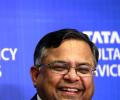
N Chandrasekaran saw his annual compensation rise to Rs 25.6 crore.

The company will utilise this time to carry out maintenance work at its manufacturing plants.

An official statement said the commission has used its helpline to undertake various well-being surveys and identification of children who have lost their parents due to COVID-19 using data provided by the Delhi government's health department.

A road map could be laid out for a gradual reduction in the tax rates from the current incidence of about 62-94 per cent without causing a major blow to the revenues of the Centre and the states. The opportunity arising out of higher GST collections should not be squandered, says A K Bhattacharya.
The shortfall in the Centre's GST collections has raised concerns over it meeting the fiscal deficit target of 3.3 per cent of GDP, reports Ishan Bakshi.

8 CEOs on the list are female, and they far outpace the median pay for the Equilar 100 as a whole

Ensure that you get a high sum insured. Also, make sure the policy covers the cost of implants (pacemaker, stent, etc), and pre and post-hospitalisation expenses.
The mop-up could have been much higher, but tax on imports fell 2 per cent y-o-y.

India's projected economic growth for 2022 has been downgraded by over two per cent to 4.6% by the United Nations, a decrease attributed to the ongoing war in Ukraine, with New Delhi expected to face restraints on energy access and prices, reflexes from trade sanctions, food inflation, tightening policies and financial instability, according to a UN report released on Thursday. The UN Conference on Trade and Development (UNCTAD) report downgraded its global economic growth projection for 2022 to 2.6 per cent from 3.6 per cent due to shocks from the Ukraine war and changes in macroeconomic policies that put developing countries particularly at risk. The report said while Russia will experience a deep recession this year, significant slowdowns in growth are expected in parts of Western Europe and Central, South and South-East Asia.

'What is most distressing is that the revival of the economy, creation of more employment, and reducing poverty are not on the agenda of the government at all.' 'We are an economy on the verge of a demographic disaster.'

The employment situation remains dire. Whatever can be done to promote greater low-skill employment should be pursued aggressively, advises former chief economic adviser Shankar Acharya.

'What happened was that over a period of time, the data analytics showed that many were claiming it and that it was being misused'

After last year's lull, number of offers jump by 15%.

Squeezing growth prospects in IT services firms and higher compensation in technology centres run by global companies are the two factors driving this trend.

'Over the next two quarters, markets will be guided by observing the earnings resilience of corporates during the second lockdown, progress of the monsoon and the damage, if any, to rural spending power due to the second wave.'

Like their international peers, Indian CEOs too have a significant portion of their incomes coming from stock options and performance-linked bonuses

Concerns among the Indian employees about fairness of their compensation and career objectives could be the key reasons for them to switch jobs.

India's equity markets are on a roller-coaster ride, after delivering spectacular returns for two consecutive years - in 2020 and 2021. The benchmark National Stock Exchange's (NSE's) Nifty50 is down 1.5 per cent in the first nine months of the current calendar year 2022 (CY22) as foreign portfolio investors sold Indian stocks due to rising bond yields in the US and across global markets, including India. The sell-off in the Indian equity markets has, however, not been broad-based and largely limited to sectors facing earnings headwinds from rising interest rates, lower commodity and energy prices, and likely economic recession in advanced economies.
